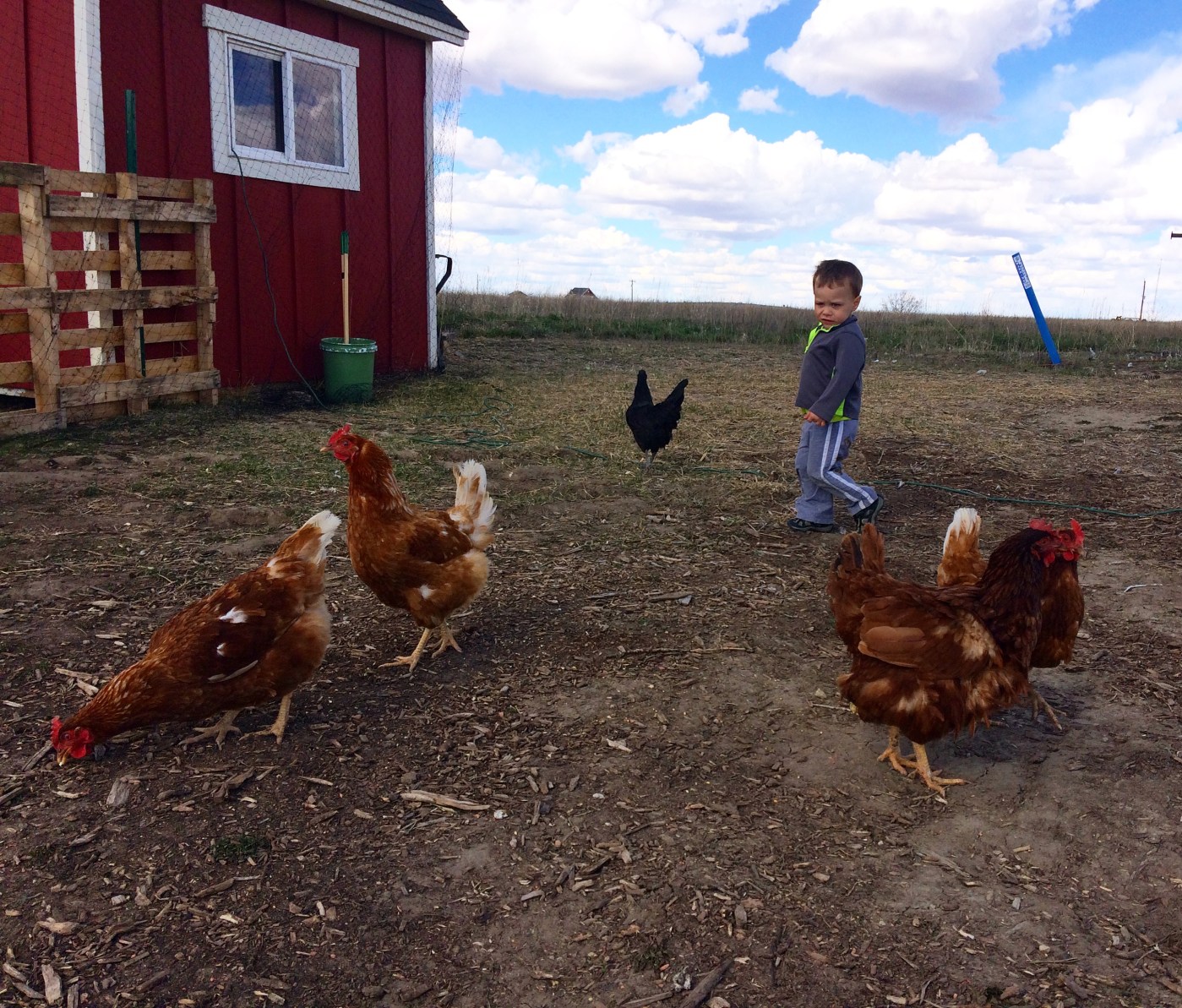
You know after you have been to enough bridal showers, that you can pretty much guess what the common answers are going to be when they start going around the room asking for the guests to give the bride the best newlywed/marital advice (right?!) Well I have to think that the same thinking applies to asking homesteaders about the best, first animal to keep is…..egg layers. However, I have always been a fan of that one woman at the shower, that without skipping a beat, gives the most off the wall advice you can imagine (and its even better when she’s older and it’s just a little bit, or alot, dirty) so I’m going to be that woman. My advice is that you shouldn’t (necessarily) do egg layers first. Everyone’s situation is different and so the advice has to be different. Let me show you….
In North Dakota, we had the enclosed garden and got that started (step 1), we also had a beautiful, red chicken coop ready to go (step 2)….or so we thought.

Although beautiful on the outside, it had not been cleaned in at least a couple of years on the inside from its previous, feathered, tenants. We are talking layers of poop, feathers and ? well your guess is as good as mine and frankly I was not about to clean THAT (and I am a mom of boys so messes and all things disgusting are not new to me, so this is saying something!) But what did that mean our next step was? No one, no article could tell us. We had to go to our motivations for homesteading to get OUR answer. One of the main reasons we wanted this lifestyle was because the way animals lived AND died was and IS very important to us. I grew up in a hunting family and I always appreciated knowing where my food came from, what it ate, how it died and what happened to it from there. We knew that having animals on our homestead was important. We also knew that we did not have the space to allow for large livestock like cattle. We also knew that our cookbook was full of chicken recipes. Yep, we are BIG chicken eaters. So why not start there? Trade egg layers for meat chickens? And yes, they are different….or can be. Egg layers are a variety of birds that lay a good deal of eggs during the year, but they have very little meat on their bones. Meat chickens, or broilers, are what’s in your grocery store, the most common is the Cornish Cross, because those things EAT! Start to finish you’re at 8 weeks, yep, hatched to harvested 8 weeks!! The third option is a dual purpose bird, that can lay eggs and does put on some meat. They are not the greatest at either, but you don’t have to have two different kinds of chickens.
We personally chose the Cornish Cross. We also chose to use chicken tractors to house our eating monsters. The tractors, were relatively inexpensive to build (pvc construction,) were light weight and could be moved around the property for the little beasties to forage (and it also helps their poop not to build up cause with how much they eat, you better believe there’s lots of that!) In and out, meat chickens were inexpensive, they served our primary meat need for our family and they also saved me from having to clean that chicken coop!

I will tell you that afterwards, that is to say, after our first round of meat chickens (EVER) was over I realized that they were a good first animal choice for other reasons as well. Because of their short lifespan, we were able to get a crash course in a homestead animal. In that first experience, we learned first hand about disease that can affect your flock, predators that can attack, good, preventative measures to take for healthy birds, what the routine looked like to care for them, and what an animal harvest day actually looked like (oh man, is it some work!) But I will share this here and now, a memory that will last my life time. Our first harvest was on a Saturday and we left a whole roaster out for the crock pot Sunday, as we sat around the table as a family and asked a blessing over that bird, I have never, NEVER felt so much gratitude. Gratitude for that animal that gave it’s life for me and my family, gratitude for the work my family was able to do to raise that bird, and gratitude for this choice we had made. And I tell you what, there was not a chance ANYONE was leaving that table before their plates were cleared of their food! That meal had become so much more important than just the package I had picked up at the grocery store. No that bird on our plates represented SO much and our final gratitude for it, for ALL of it, was eating our meal.
That first experience gave us confirmation that we LOVED this lifestyle, it gave us confidence that we could DO this lifestyle and that we had in fact done it. Now, we felt ready to take on an animal that would require more time and commitment from us…..egg layers. No kidding, we actually were crazy and went pig next, 4 in fact! We did eventually get around to egg layers. Those amazing pig farming, neighbors of ours, offered us some of their layers and we could not refuse.
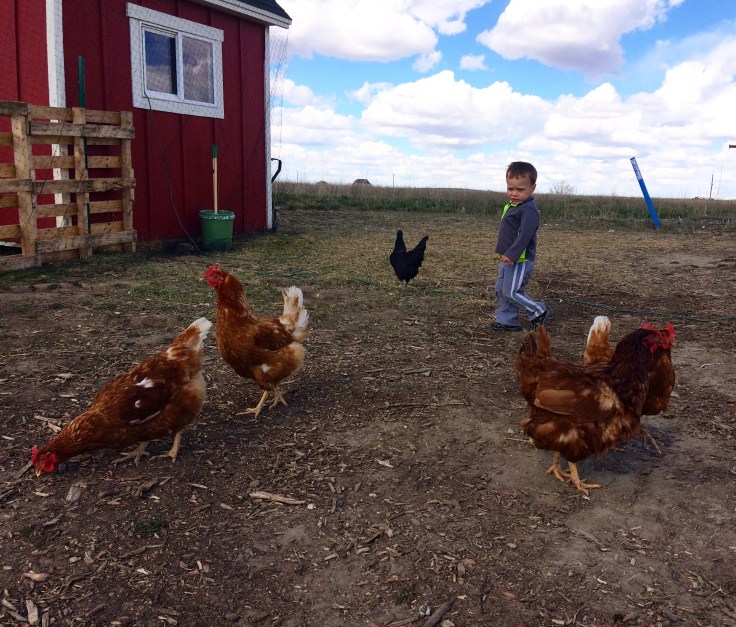
So it was, that I found myself, head to toe covered in a layers, bandana over my hair, mask over my nose and mouth and gloves ,cleaning out that chicken coop to make it ready for our new lovelies. And just like everything else so far, it was worth it! I am not sure my kids have loved any animal more (including the dog) than those chickens (and the ones we have now.) That is the first lesson, nope second, I learned from egg layers, that they do become loved creatures, the trick then is living with chickens and toddlers (oh how you will read so many posts on THAT topic!)
The first lesson was THAT coop cleaning, coop cleaning is essential for keeping egg layers. So whether you are like me, and have a giant mess to clean up from previous tenants, or it’s just that time of year, cleaning the coop is a must! Here are my top 5 tips for good coop cleaning:
TOP 5 Coop Cleaning Tips:
- Wear protective gear! Its totally not worth getting sick and who knows what is in there honestly. Don’t be cool, brave or nonchalant, DO IT!
- Get a good scraper! The plastic putty knives at any home improvement store work great! And I would even have a metal one on hand just in case you have stubborn poop (which you will) just be careful not to dig into the wood.
- Think “Top to Botttom.” Remember that the ceiling, and tops of the walls down to the floor are dirty, broom off, dust off, scrape off and out everything and everywhere! Then give it a good hose down.
- Ventilate and let dry.
- Sanitize!!! Now, I have two versions of the world’s simplest DIY Sanitizer (honestly when you can you gotta!) First, is when I have not prepared; basically I had the time, felt the motivation and went with it. Its 3 cups plain, old vinegar to 1 cup water; mix it together and put it in a spray bottle. Now, when you have some time before you’re cleaning your coop, here’s the modification. Fill a bucket with 2 quarts vinegar and then add the rinds of any citrus you like (personally I go with lemons so I can use the leftovers to make some lemonade for when the jobs done.) Generally 4-5 works. Put your concoction on a shelf somewhere (mine goes in the laundry room) and give it a month to do its thing. Again, put in a spray bottle and go to town sanitizing that coop!
Ironically, on our new homestead, egg layers are indeed the first living thing (veggie or animal.) Goes to show, there’s no rhyme or reason, look at what you are working with, what you need and go to work!
Megan
 Faith Family Farm Homestead
Leave a comment